In Depth Review: The Man Who Mistook His Wife for a Hat — Oliver Sacks – The Cartography of the Soul
A Review of the Human Soul through the Lens of Neurology
In the landscape of 20th-century literature, few books have managed to bridge the chasm between the cold precision of the laboratory and the warm, often tragic pulse of the human heart as effectively as Oliver Sacks’ 1985 masterpiece, The Man Who Mistook His Wife for a Hat. As a literary critic and science communicator, one often encounters “popular science” books that either oversimplify the data for the sake of a story or drown the reader in jargon that obscures the soul. Sacks does neither. He pioneered a genre that could be called the “Neurological Novel”—clinical case studies that read like Kafkaesque parables, yet remain grounded in the terrifying reality of neurobiology.
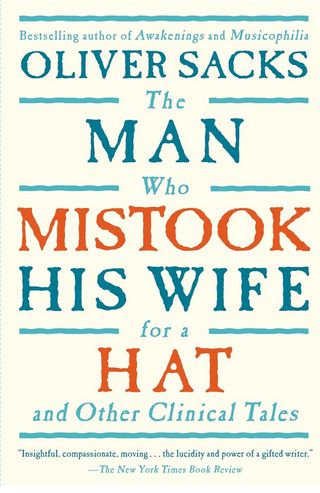
1. Introduction: The Book’s Impact on its Genre
Before Sacks, the neurological case study was a dry, standardized affair: a list of deficits, a record of reflexes, and a post-mortem analysis. Sacks revolutionized the genre by reintroducing the “subject.” He didn’t just write about brains; he wrote about people whose worlds had been fundamentally altered by cellular mutiny.
The Man Who Mistook His Wife for a Hat transformed how the public perceives cognitive disability. It moved the conversation away from “what is wrong with this person?” to “how does this person now inhabit the world?” Its influence is visible in everything from the rise of narrative medicine to the way modern television portrays neurodivergence. Sacks taught us that a lesion is not just a medical fact; it is a life-altering narrative shift.
2. Premise Analysis: What is the Author Trying to Prove?
The central thesis of Sacks’ work is that the “Self” is a resilient, creative entity that persists even when the biological hardware fails. Specifically, Sacks turns a piercing eye toward the right hemisphere of the brain.
Historically, neurology was “left-brain centric,” focusing on language and logic. The right hemisphere—responsible for the “concrete,” the “real,” and the “form”—was often dismissed as the “silent” hemisphere. Sacks argues that right-brain disorders are far more devastating and insidious because they don’t just rob a person of words; they rob them of their “grounding” in reality. These deficits are frequently mistaken for generalized dementia because the patient remains articulate (their left-brain language centers are intact), yet they seem “crazy” because they can no longer navigate the physical or emotional world. Sacks seeks to prove that these patients are not “losing their minds” in a generic sense; they are experiencing specific, structural collapses of perception that require a different kind of clinical empathy.
3. The 3 ‘Moments of Awe’
Sacks populates his book with figures who seem like they escaped from a Borges short story. Here are three instances where the science feels like surrealist fiction:
- The Title Case (Dr. P): A distinguished musician who literally cannot distinguish between a face and an object. He looks at his wife and sees a hat; he looks at a fire hydrant and sees a child. What makes this “awesome” is not just the deficit, but Dr. P’s adaptation: he “musics” his way through life. He has a dressing song, an eating song, and a walking song. When the music stops, his world collapses into a pile of unrecognizable shapes. It is a stunning example of the brain using one intact system (melody) to bypass a broken one (visual processing).
- The Disembodied Lady (Christina): Imagine waking up and having no sense of where your body is. Not because you are paralyzed, but because your “proprioception”—the “sixth sense” that tells you where your limbs are—has vanished. Christina felt like a ghost inhabiting a corpse. Sacks describes her journey to “re-learn” how to move by using her eyes to watch her hands and feet. It is a haunting reminder that our “self” is physically anchored in senses we don’t even realize we have.
- The Twins (John and Michael): These autistic savants could not perform simple arithmetic, yet they “saw” prime numbers as a landscape of beauty. Sacks describes them sitting in a corner, “tossing” six-digit prime numbers back and forth like a game of catch, finding a deep, harmonious peace in the numerical fabric of the universe. This moment challenges our very definition of intelligence: how can a man who cannot calculate change for a dollar intuit the fundamental building blocks of mathematics?
4. Density Critique: Filler vs. Value
One might look at the footnotes and the frequent digressions into the philosophy of Nietzsche or the psychology of Luria and wonder if Sacks needed an editor. However, this is where the “density” of the book becomes its greatest asset. There is virtually no filler in this text; there is only context.
Sacks provides “thick descriptions.” He doesn’t just tell you a patient has Korsakoff’s syndrome; he spends five pages explaining the philosophical implications of living in a “continuous present” without memory. For the reader seeking a “fast” entertainment read, the technical passages on the “gnostic” functions of the brain might feel like a hurdle. But for the seeker of knowledge, these sections are the connective tissue. Sacks is building a bridge between the how (the synapses) and the why (the existential experience). Every page adds value because it refuses to settle for a superficial explanation of human suffering.
5. Applicable Lessons for Daily Life
While The Man Who Mistook His Wife for a Hat is a work of clinical neurology, its lessons are profoundly applicable to the “neurotypical” world:
- The Fragility of Reality: We assume we see the world as it is. Sacks shows us that we see the world as our brain constructs it. This humbles the reader, fostering a deeper patience for those who “see” things differently—whether due to illness, culture, or temperament.
- The Power of Compensation: When a person loses a faculty, they don’t just become “less”; they become “different.” They develop compensatory strengths. This encourages us to look for the “hidden assets” in ourselves and others when facing loss.
- The Limits of Metrics: Sacks repeatedly shows that IQ tests and standardized exams fail to capture the “narrative” essence of a person. A person may “fail” a cognitive test but “succeed” at living a meaningful, musical, or spiritual life.
6. Final Verdict: Who is This Book For?
This book is for the intellectually curious soul who isn’t afraid to feel a bit of “metaphysical vertigo.” It is for the medical student who fears becoming a technician; it is for the literature lover who wants to understand the biological machinery of the characters they adore; and it is for anyone who has ever looked at a loved one suffering from “dementia” and wondered if the person they knew is still in there.
It is a “dense” read, yes—but it is the density of a diamond. It is packed with data, but it glows with the light of humanism. Oliver Sacks didn’t just write a book about brain diseases; he wrote a map of the human condition. It is worth every minute of your time because it will fundamentally change how you look at the person in the mirror—and, more importantly, how you look at the stranger on the street.