In Depth Review: Microbe Hunters by Paul de Kruif – The Invisible War That Shaped Civilization
1. Introduction: The Book’s Impact on Its Genre
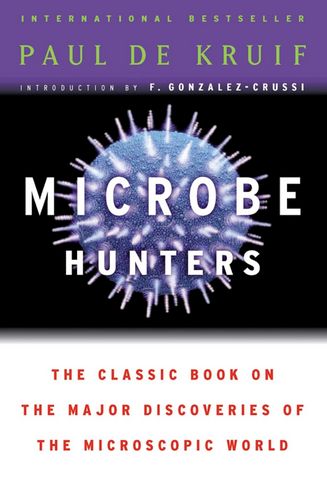
Before 1926, science writing was a dusty affair—textbooks for students, monographs for specialists, and the occasional lecture for gentleman scholars. Paul de Kruif’s *Microbe Hunters* detonated this genteel tradition with the force of a literary petri dish gone viral. This book didn’t just popularize microbiology; it invented the modern science thriller. De Kruif, himself a bacteriologist who abandoned the lab for the typewriter, understood that the story of microbes wasn’t about cells and stains—it was about obsessed, brilliant, flawed humans hunting invisible killers with makeshift tools and monumental courage. His prose style—breathless, hyperbolic, sometimes bordering on pulp fiction—would be copied by science writers for the next century. The impact was seismic. The book inspired generations to enter science, including Nobel laureates who cite it as their gateway drug to research. More importantly, it proved that rigorous science could be packaged as page-turning drama without sacrificing accuracy. De Kruif didn’t write a book about microbes; he wrote an epic about humanity’s war against an enemy we couldn’t even see until 250 years ago.
2. Premise Analysis: What Is the Author Trying to Prove?
De Kruif structures his argument as a four-act drama in the theater of human ignorance:
Act 1: “They Exist”—For millennia, disease was blamed on bad air, angry gods, or moral failings. Then Antonie van Leeuwenhoek, a Dutch cloth merchant with obsessive lens-grinding habits, revealed a universe of “little beasties” swimming in rainwater.
Act 2: “They Come from Other Microbes”—The spontaneous generation debate raged for centuries. Do microbes appear from nothing? Louis Pasteur’s swan-neck flasks proved definitively: life comes only from life. Microbes have parents.
Act 3: “They Are Fun”—Early microscopists treated bacteria like a gentleman’s entertainment. Leeuwenhoek scraped his own teeth plaque just to watch the “animalcules” dance. Science was sport.
Act 4: “They Are Dangerous”—Robert Koch’s discovery that specific microbes cause specific diseases transformed microbiology from hobby to holy war. Suddenly, those dancing dots were mass murderers. De Kruif’s thesis: humanity’s relationship with microbes mirrors our scientific evolution—from superstition to observation, from curiosity to combat. The book argues that our survival depends not on eliminating microbes but on understanding them through the scientific method.
3. The 3 ‘Moments of Awe’: Facts That Surpass Fiction
Moment #1: Leeuwenhoek’s Secret Microscopes
Antonie van Leeuwenhoek, an untrained Dutch draper, built microscopes so powerful that scientists couldn’t replicate them for another 150 years. His secret? Obsession bordering on madness. He ground over 500 lenses by hand, achieving 270x magnification when others struggled with 30x. The most astonishing detail: he kept his lens-making technique secret his entire life, taking it to his grave. He discovered bacteria, sperm cells, and blood cells, yet never published a single scientific paper—only letters to the Royal Society describing what he saw. A shopkeeper outperformed every university scientist in Europe through sheer, manic dedication. Fiction would demand a tragic flaw; reality gave us a perfectionist who changed biology while selling buttons.
Moment #2: Pasteur’s Theatrical Anthrax Demonstration
In 1881, Louis Pasteur publicly bet his reputation on injecting sheep with anthrax. At Pouilly-le-Fort, before journalists, farmers, and skeptics, he vaccinated 25 sheep, leaving 25 unvaccinated. Two weeks later, all 50 received lethal anthrax doses. Pasteur spent the night before the reveal vomiting from anxiety, certain he’d failed. The next morning: 25 vaccinated sheep grazed peacefully while 22 unvaccinated lay dead, three dying before the crowd’s eyes. The twist? Pasteur had secretly used his rival’s vaccine method, not his own, but claimed sole credit. A scientific triumph built on deception—no novelist would dare make their hero this morally complex.
Moment #3: The Mosquito Detective Story
Walter Reed’s team in Cuba proved mosquitoes spread yellow fever through an experiment that would be illegal today. They built two identical huts: one filled with “fomites” (bloody clothes and bedding from yellow fever victims) but screened against mosquitoes; another clean but filled with infected mosquitoes. Volunteers slept in both. Those in the filthy, mosquito-free hut remained healthy; those in the clean, mosquito-infested hut contracted yellow fever. One volunteer, Jesse Lazear, secretly experimented on himself, died, and became scientific martyrdom incarnate. The revelation that disease could fly, not just crawl or seep, reads like science fiction—except it saved Panama Canal workers and millions since.
4. Density Critique: Filler vs. Value
*Microbe Hunters* is paradoxically both dense and breezy—dense with facts, breezy in delivery. De Kruif packs each chapter with enough scientific history to fill a semester’s curriculum, yet the pace never slackens. There is zero filler, but there is repetition—deliberately so. Each scientist’s story follows the template: outsider sees what others miss, establishment resists, triumph validates rebel. This isn’t laziness; it’s thematic reinforcement. The **Learning Ratio** is extraordinary because De Kruif layers information like a lasagna—biographical detail, scientific process, historical context, and technical explanation all stacked without feeling overwhelming. The book’s 350 pages contain: – Complete biographies of 12 pioneering microbiologists – Explanations of dozens of diseases and their mechanisms – The evolution of microscopy and laboratory techniques – The birth of immunology, bacteriology, and epidemiology – Sociological analysis of scientific resistance to new ideas Every anecdote serves dual purpose: entertainment and education. When De Kruif describes Koch staying up 24 straight hours watching anthrax bacilli multiply, we’re learning both microbial reproduction rates and the obsessive personality required for discovery.
5. Applicable Lessons: From Petri Dish to Daily Life
Lesson 1: Question the Invisible
Before microbes were “seen,” they still killed. Today’s parallel: what invisible forces (algorithms, microplastics, unconscious biases) shape our lives unexamined? De Kruif teaches us to build better “lenses”—mental and literal—to see hidden influences.
Lesson 2: Persistence Beats Genius
Leeuwenhoek had no formal education. Koch was a rural doctor. Pasteur failed his first university entrance exam. Their secret? Relentless, systematic observation. Applied today: expertise isn’t inherited; it’s earned through repetition and attention.
Lesson 3: Healthy Skepticism of Authority
Every breakthrough in the book faced “expert” ridicule. Semmelweis was driven to madness for suggesting doctors wash their hands. Today’s lesson: respect expertise but verify claims—especially when “everyone knows” something that’s never been properly tested.
Lesson 4: The Microbial Perspective
Understanding that we’re outnumbered by microbes 10-to-1 in our own bodies reframes health. Instead of “killing germs,” we should think ecosystem management. This applies to everything from antibiotic use to probiotic foods—work with microbes, not always against them.
6. Final Verdict: Who Is This Book For?
*Microbe Hunters* is mandatory reading for three audiences: **1. The Science-Curious Layperson:** No prerequisites needed—De Kruif explains everything from scratch with infectious enthusiasm. **2. Students and Educators:** This book should be required reading in every high school biology class. It humanizes science, showing that discoveries come from real people with real flaws. **3. Anyone Who Thinks Science Is Boring:** This book reads like a thriller because it is one—humanity versus an invisible enemy, with our species’ survival at stake. The time investment (8-10 hours) returns compound interest. You’ll gain not just scientific literacy but an understanding of how science actually works—messily, competitively, heroically. In our era of pandemics and antibiotic resistance, understanding our microbial frenemies isn’t just interesting—it’s essential. De Kruif proves that the greatest stories aren’t fiction—they’re the true tales of those who hunted the invisible and won.